The short version
A short-shipped order is manageable if you work it in the right order: verify against your own record, accept what's genuinely there, flag the gap immediately, and decide your cover plan before the shelf actually goes empty. Panicking and skipping straight to an expensive emergency order is the actual costly mistake, not the short-ship itself.
Every store gets short-shipped eventually — a picking error, a supply issue upstream, a genuine stock shortage on the supplier's end. It's not usually malicious. What separates a minor inconvenience from a real problem is what happens in the next twenty minutes after you notice.
The checklist
1. Verify against your actual order, not memory
Before you do anything else, pull up exactly what you ordered — quantities, per line — and compare it against what physically arrived. Don't work from "I think we ordered about this much." A precise comparison tells you exactly what's short and by how much, which matters for every step that follows.
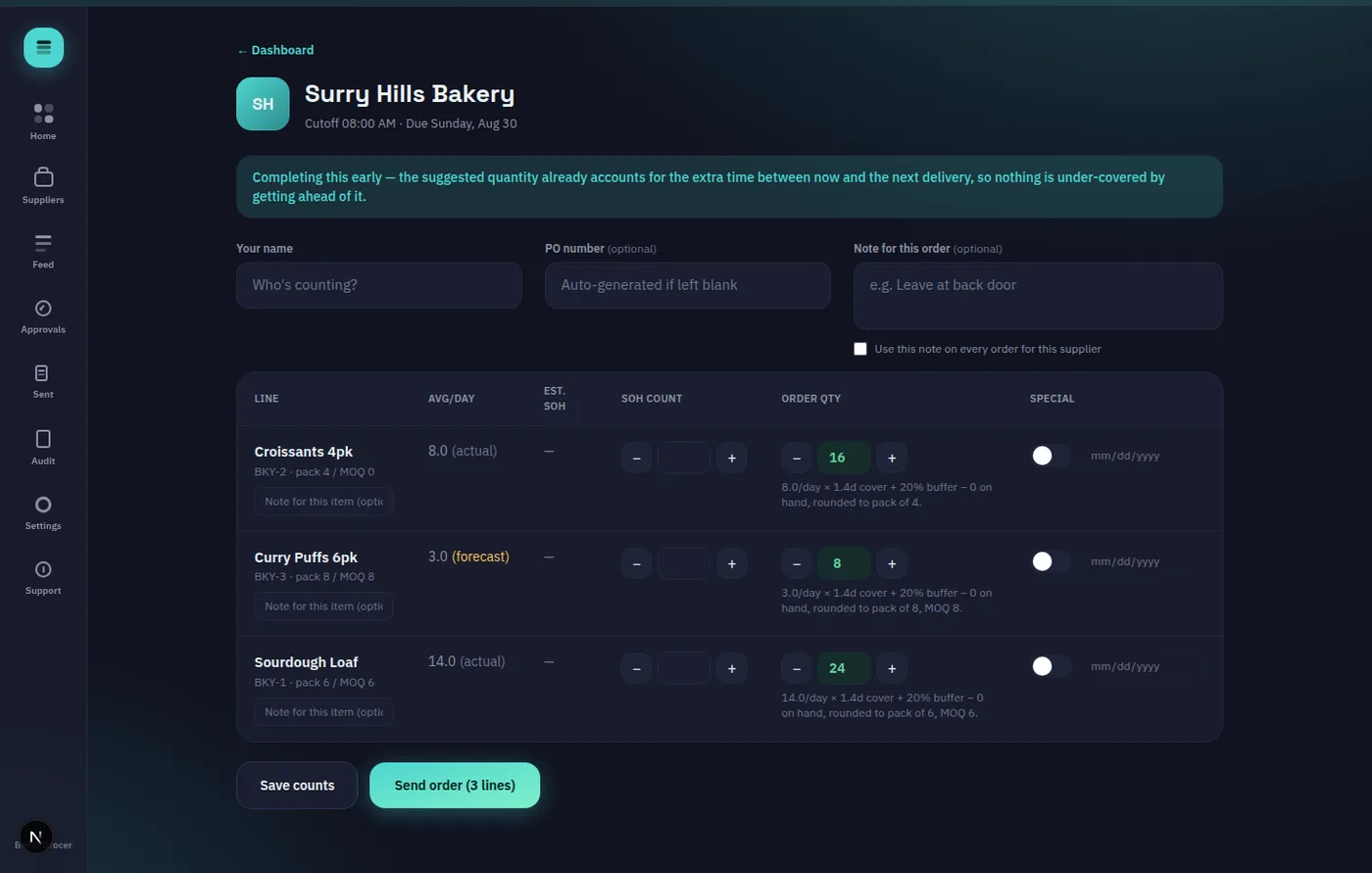
If your order process includes a manual PO number or a saved record of what was actually sent, this comparison takes thirty seconds instead of ten minutes of guessing.
2. Accept the good stock — don't refuse the whole delivery
A common instinct when something's short is to reject the delivery outright out of frustration. Almost always the wrong move. Take what's genuinely there and correct — you need that stock on your shelves regardless — and handle the shortfall as its own separate issue. Refusing a partial delivery over a partial problem usually leaves you with less stock, not more leverage.
3. Note the shortfall on the record immediately, not from memory later
The moment you confirm what's missing, write it down against that specific delivery — which lines, what quantity was short, what date. This is the single step people skip when busy, and it's the one that matters most three weeks later when you're trying to remember whether this is a one-off or a pattern with this supplier.
4. Call the supplier before the shelf goes empty, not after
Don't wait until you've actually run out to raise it. Call as soon as you've confirmed the shortfall, while there's still time for them to either send a top-up delivery or at minimum tell you honestly when the gap will be resolved. A same-day heads-up gives you options; a call after the shelf's already bare gives you none.
5. Decide your cover plan based on what you actually need to bridge
Work out exactly how many days you need to cover until the next scheduled delivery, or until the supplier can send a make-good, whichever comes first. This isn't a moment to panic-order double from an alternate supplier at a worse price — it's a moment to work out the real, specific gap and cover exactly that, no more.
6. Check whether this line needs a note for next time
If a particular item is prone to short-shipping — a seasonal produce line, something the supplier's had ongoing trouble sourcing — a note attached to that line for future orders ("confirm availability before relying on this for weekend cover") saves the next person from being caught out the same way.
7. Check whether the short-ship affects an order still in transit elsewhere
If you've already got a follow-up order in the pipeline with the same supplier, or another supplier's delivery is due before the shortfall resolves, factor the short-ship into that next decision too. It's easy to treat each order in isolation, but a shortage this week can quietly change what you actually need next week — worth a quick mental check rather than assuming everything else on the schedule is unaffected.
8. Log it, and actually revisit the log
A single short-ship is a supplier having a bad week. Four short-ships from the same supplier in two months is a pattern worth a real conversation — possibly about switching volume elsewhere. You can only tell the difference if you're keeping a record, not relying on a gut feeling about "that supplier's been a bit unreliable lately."
A full audit trail — every count, every order sent, every note — makes this kind of pattern-spotting a five-minute review instead of trying to reconstruct months of memory.
The mistake that actually costs money
The expensive part of a short-ship usually isn't the shortfall itself — it's the panic response. An emergency top-up order from an unfamiliar supplier at a worse price, or an over-correction on the next regular order to "make sure this doesn't happen again," almost always costs more than the original short-ship did. Work the checklist calmly, cover exactly the real gap, and let the supplier relationship absorb the hit — not your margin.
If you want to see how order history and per-line notes work together to make this kind of tracking easier over time, our knowledge base covers the full order and audit trail flow. And if you're a supplier reading this from the other side of a short-ship conversation, our page for wholesalers and suppliers covers how clearer availability signalling can reduce these incidents in the first place.
A short-ship is a bad afternoon. A poorly-handled short-ship is a bad month — the difference is entirely in how methodically you work through it.