Heavyweight ERP systems fail small-to-medium cafe operations for one structural reason: ERP is designed to unify inventory, finance, HR, procurement, and reporting into a single system for organizations complex enough to need that unification — and most cafes, even good, busy, multi-location ones, aren't that complex. The result is a tool bought for capability the business doesn't use, at a setup cost the business does feel.
This isn't a knock on ERP as a category. Large hospitality groups with dedicated finance and operations teams genuinely benefit from one system of record across departments. The failure mode is specifically about mismatch: a five-table cafe or a three-location small chain doesn't have the departmental complexity ERP is solving for, but still pays the implementation and training cost as if it did.
Where the mismatch actually shows up
1. Implementation timelines built for enterprise onboarding. ERP rollouts commonly run weeks to months — configuring chart-of-accounts mappings, user roles, integration points with other systems. A cafe owner who wants a working ordering process next week is starting from a timeline built for a business with a project team.
2. Feature breadth nobody on a five-person team will use. Multi-currency handling, complex approval hierarchies across departments, manufacturing/production modules — these solve real problems for the businesses ERP is built for, and sit unused as pure complexity for a cafe whose actual daily need is "count stock, know what to order, send it to the supplier."
3. Per-seat and module pricing that scales the wrong direction. ERP pricing tends to reward scale — more users, more modules, lower marginal cost. A small operation pays close to the entry price for a fraction of the platform's capability, without ever hitting the volume where ERP economics actually pay off.
4. Generic inventory logic, not hospitality-specific demand patterns. This is the part that's easy to miss until you've lived it: retail demand and hospitality demand behave differently. A grocery aisle item drifts gradually; a café dish trends for a week and drops off in a block. Generic ERP inventory modules usually don't distinguish between the two — they apply one smoothing model regardless of venue type, which means a fast-moving hospitality item's sales average lags reality for longer than it should.
5. Training overhead that outlasts staff turnover. Cafes and small hospitality venues tend to have real staff turnover. An ERP system complex enough to need a training manual is a system where every new hire is a re-onboarding cost — and that cost compounds every time someone leaves.
What actually fits a small cafe's ordering problem
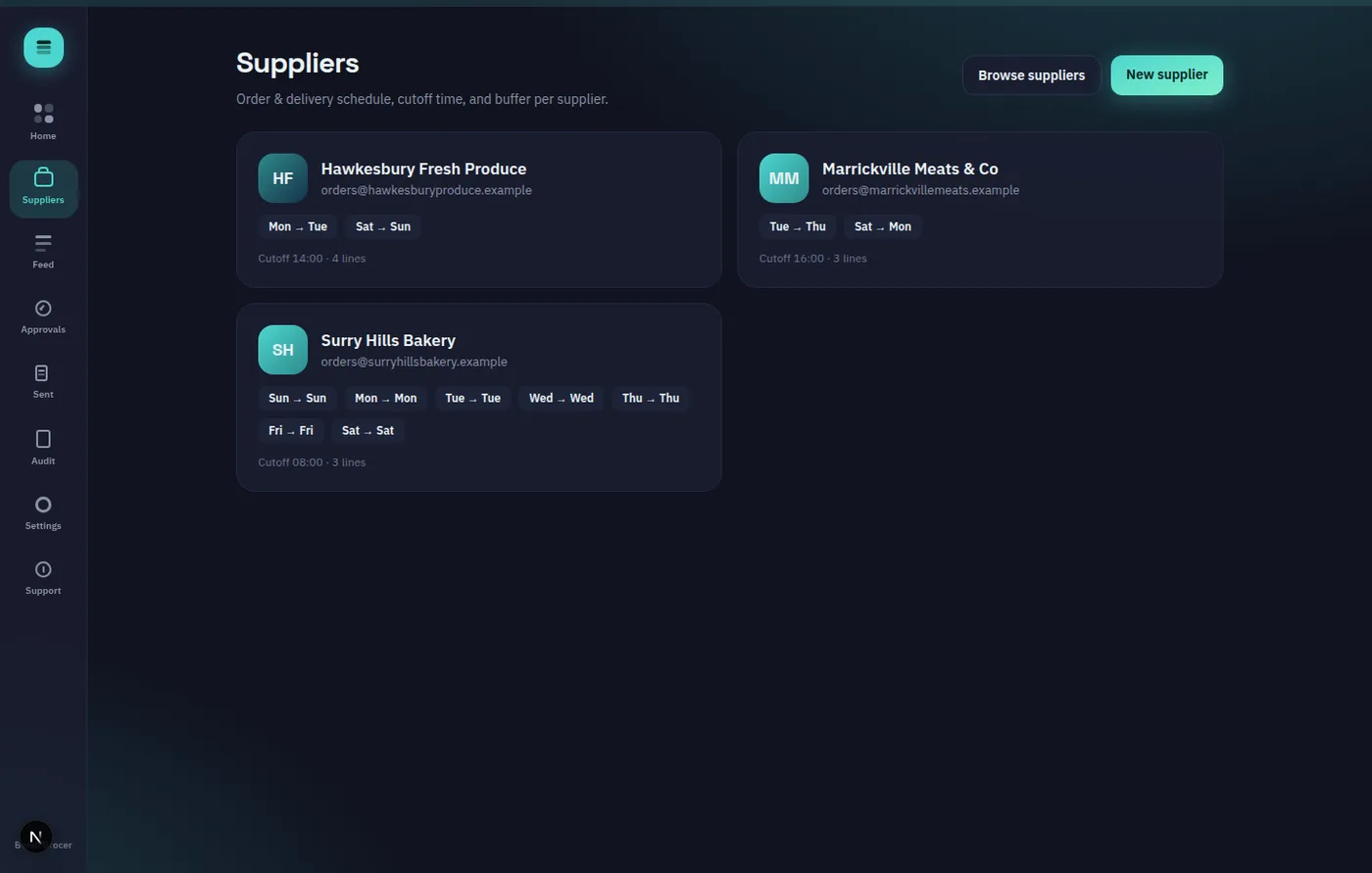
The job a cafe genuinely needs solved, most of the time, is narrower than what ERP offers: know what's in stock, know when each supplier's order is due, get a sensible starting quantity to review, and send it — with a lightweight way for a manager to approve the pricier orders without approving every single one.
That's a much smaller surface area than ERP, and purpose-built tools exist for exactly that surface. OnHand, for example, treats venue type as a first-class setting — a hospitality venue's average-sales calculation blends new observations in faster (50%) than a retail store's (30%), specifically because hospitality demand moves in those sustained blocks rather than drifting gradually. That's the kind of scale-appropriate detail that gets lost inside a generic ERP inventory module, not because ERP vendors don't know demand patterns differ, but because generalizing across every industry they serve means nobody gets the specific tuning.
The honest tradeoff
A narrower tool doesn't do what ERP does across the rest of the business — payroll, multi-department financial reporting, warehouse logistics. If your cafe operation has genuinely outgrown "a few locations, one ops person, straightforward supplier relationships" and you need one system tying inventory to full financial consolidation across departments, that's a real reason to still consider ERP, or at least a mid-tier platform built for multi-site hospitality groups. The line isn't about cafe versus non-cafe, it's about organizational complexity — and most small-to-medium cafes, even successful ones, simply haven't crossed it.
How to check this for your own operation
Ask honestly: does your team need one login that also handles payroll and departmental financial reporting, or does it need a fast, reliable way to count stock and get orders out the door on time? If it's the latter, a dedicated ordering tool is very likely the better-fitting purchase, both in setup time and ongoing cost. You can see what that narrower version looks like end to end — no account needed — through the live demo, and the full feature and pricing rundown is public with no sales call required to see it.