Staff retention in independent retail and hospitality gets discussed almost entirely in terms of pay and scheduling, and both matter enormously. But there's a quieter factor that gets far less attention: how frustrating the actual tools a staff member has to use every shift really are. A clunky, outdated back-of-house process doesn't show up on an exit interview as the headline reason someone left, but it's often sitting underneath the more visible complaints.
The friction nobody names directly
Ask a staff member who's left a retail or hospitality job why, and the answer is usually about pay, hours, or management. Rarely does anyone say "the stock ordering system was annoying to use." But that doesn't mean it wasn't a real contributor to how the job felt day to day. A shift full of small frustrations — a desktop terminal in a back office that has to be walked to and from repeatedly, a paper sheet that has to be transcribed later, a process that takes longer than it should for no good reason — adds up to a job that simply feels harder than it needs to, even if no single frustration is worth mentioning on its own.
Independent retail and hospitality already compete for staff against businesses that, in many cases, have more polished operations and more modern tools. A new hire who's used a phone for nearly everything else in their life, then hands them a clipboard or sits them at a shared desktop terminal for stock management, notices the gap — even if they can't quite articulate it as a reason to leave.
Why mobile-first is different from "having an app"
There's a meaningful difference between software that technically works on a phone and software genuinely designed around one. A lot of older retail systems were built for a desktop terminal first and then squeezed onto a smaller screen as an afterthought — usable, but never comfortable, and rarely something a staff member reaches for naturally.
A genuinely mobile-first workflow starts from the actual physical motion of the job: someone walking the store, phone in hand, moving down each aisle or section, counting what's on the shelf. The screen is designed for that motion specifically — quick to enter a number, quick to move to the next item, legible without needing to stop and squint. It's a small design difference, but it's the difference between a tool a staff member tolerates and one that actually fits how the work happens.
This matters more for the newer or more casual staff who tend to be handed inventory tasks in a smaller operation. A confusing or intimidating system creates a real barrier to a junior team member confidently taking on responsibility — and a system that feels as natural as any other phone app removes that barrier almost entirely, which has a knock-on effect on how much ownership newer staff are willing and able to take on.
The retention angle, made concrete
None of this replaces fair pay or reasonable scheduling as the primary levers for retention — those still matter more. But in a tight labor market, where every advantage counts, reducing daily friction is one of the few retention levers an individual operator can pull without needing a bigger budget or a wage increase they may not be able to afford. A staff member who finds their shift genuinely less annoying to work, because the tools around them work the way tools on their phone are supposed to, is a staff member with one fewer reason to start looking elsewhere.
There's also a delegation benefit that compounds this. Mobile-first tools that clearly show what needs doing — which supplier order is due, what's been counted, what still needs attention — make it realistic to hand real responsibility to junior or casual staff without a manager hovering over every step. That's good for the business, and it's also good for staff who want to feel trusted with something beyond the most repetitive tasks.
This is part of why OnHand was built around a phone-first walk-and-count screen rather than a desktop-first interface retrofitted for mobile — the 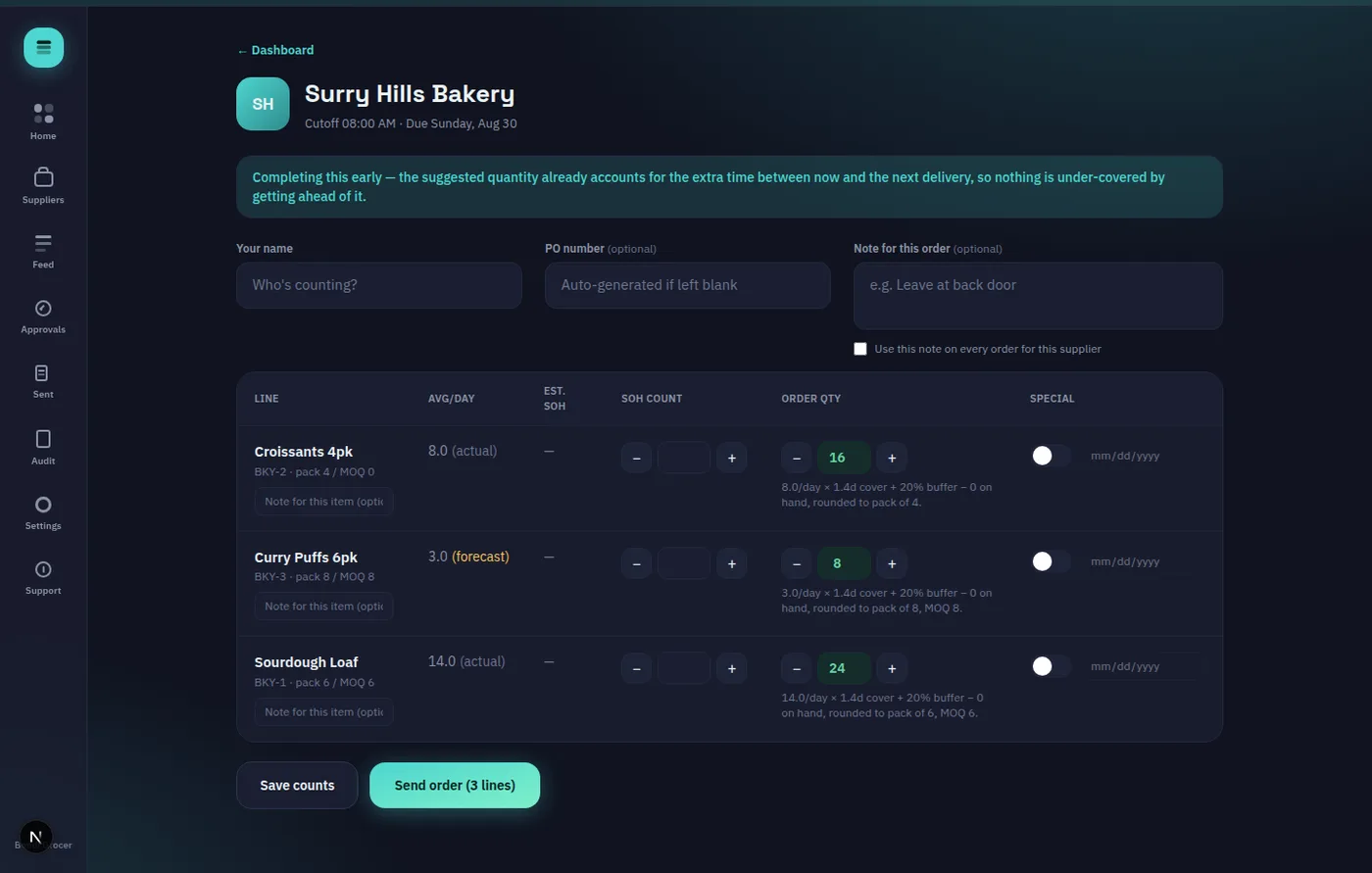 view is the same screen whether it's opened on a phone mid-shift or a tablet at the counter, with nothing about it assuming a desk and a keyboard. You can try that flow directly through the live OnHand demo, no account required.
A small lever worth pulling
Staff retention is a genuinely hard problem, and no single tool fixes it. But independent operators looking for levers that don't require a bigger payroll budget should take the daily experience of the job seriously as one of them — and back-of-house software that actually respects how staff already use their phones is a low-cost, high-leverage place to start.